
Field notes for homeowners thinking it over
What a remodel actually costs — and why
The sticker isn't one number; it's a stack of decisions. Here's where the money goes, why we start from a floor instead of a final price, and how to keep the budget yours.
The short answer
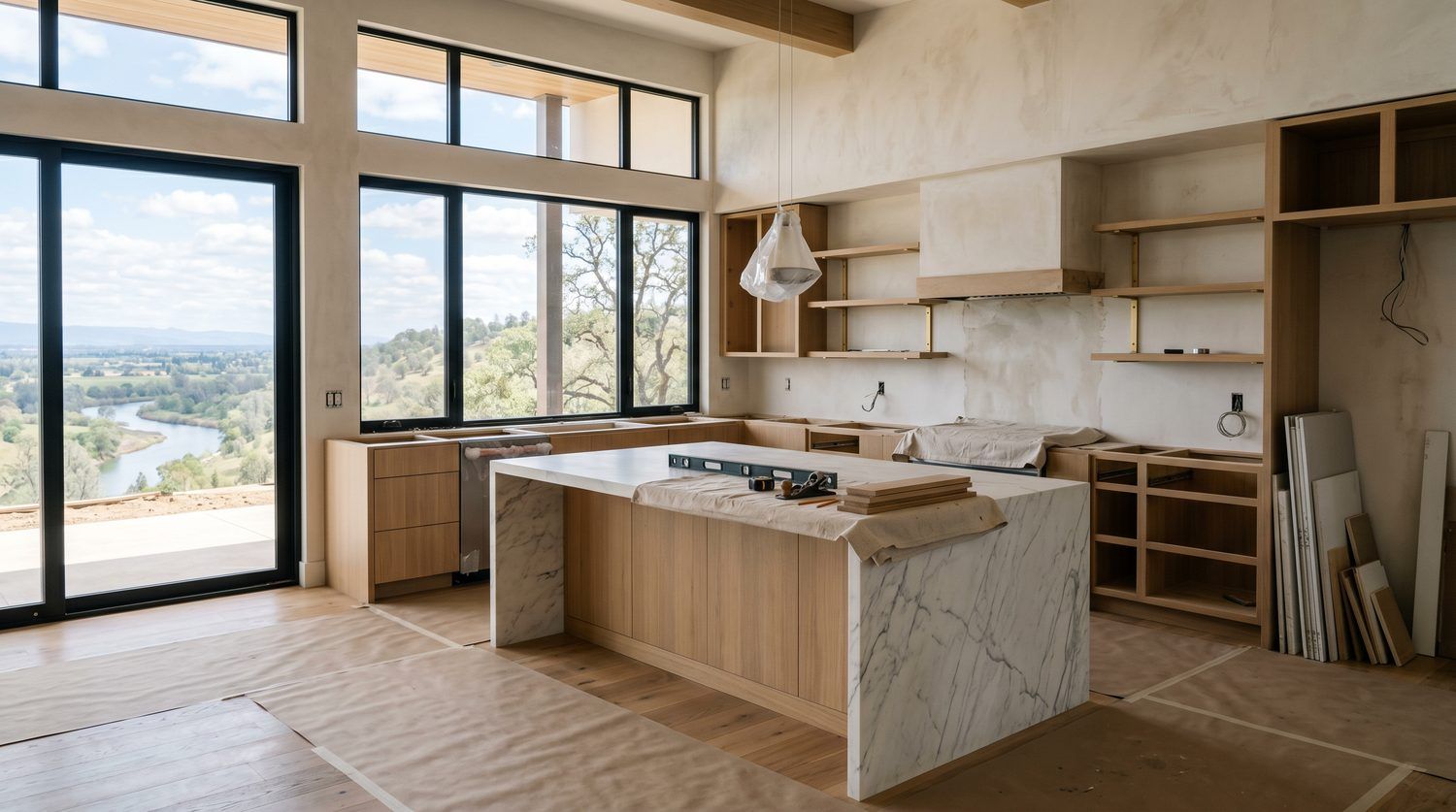
Two in three homeowners say upfront cost is their biggest worry. The honest version: a high-end remodel's price is driven less by labor than by what you choose — cabinetry, stone, fixtures — and by what's hiding behind older walls. That's why we name a starting point and set the real number together.
Where the money actually goes
A whole-home project, broken into the five phases every remodel moves through.
Cabinetry & millwork
30%
Labor & installation
22%
Stone, tile & surfaces
18%
Appliances & fixtures
16%
Structural / mechanical
10%
Contingency
4%
A typical allocation for a high-end room — yours will shift with scope and selections. The single biggest lever is what you choose, not who swings the hammer.
Why we quote a starting point
An allowance is a budgeted line for a choice you haven't made yet — the tile, the faucet, the range. Pick within it and the number holds; reach past it, and it moves. That's not a trick; it's just honesty about decisions that haven't happened yet.
We also carry a contingency for the things older homes hide — the 1962 wiring, the soft subfloor. Naming it up front is how a surprise stays a line item instead of a crisis.
Questions homeowners actually ask
Why show “from $X” instead of a price?
Because the final figure depends on choices you haven't made yet. A starting point tells you the floor honestly; the rest is set together once scope and selections are real.
What's an allowance?
A budgeted amount for an item you'll choose later — say, $8,000 for tile. Choose within it and your budget holds. It keeps early numbers real without pretending you've already decided everything.
What usually pushes a budget up?
Mid-project changes, long-lead materials chosen late, and what's behind the walls in older homes. The first is in your control; we plan a buffer for the rest.
Can I phase the work?
Often, yes. Sequencing a project over time is a normal way to align scope with budget — we'll map a phasing plan in the Planning Conversation.
Begin a Planning Conversation
Bring your wish list and a budget range you're at peace with. We'll map a realistic scope and a number you can plan around — before anything is ordered.
No pressure, no sales theater. A working session to see if the project — and the fit — are right.
JRG Construction
Luxury remodeling, built to stay.
Sacramento metro & the American River corridor.
